



Blog
Latest insights and updates
Healthcare Clinics: Smarter Scheduling & Triage with AI (and Patient Privacy Done Right)
Key takeaways
- AI assistants handle booking, reminders, and basic questions 24/7
- No-show prediction + waitlist automation keep calendars full and clinicians busy
- Triage bots classify urgency (urgent vs. routine) and route to the right service
- Protecting PHI is non-negotiable: consent, data minimization, audit logs, and encryption
Why this matters now
Clinics face rising demand, limited staff, and patients who expect instant, omnichannel access. Missed appointments and long waits cost revenue and trust. AI lets clinics automate what's repetitive, prioritize what's urgent, and personalize the rest without replacing clinicians.
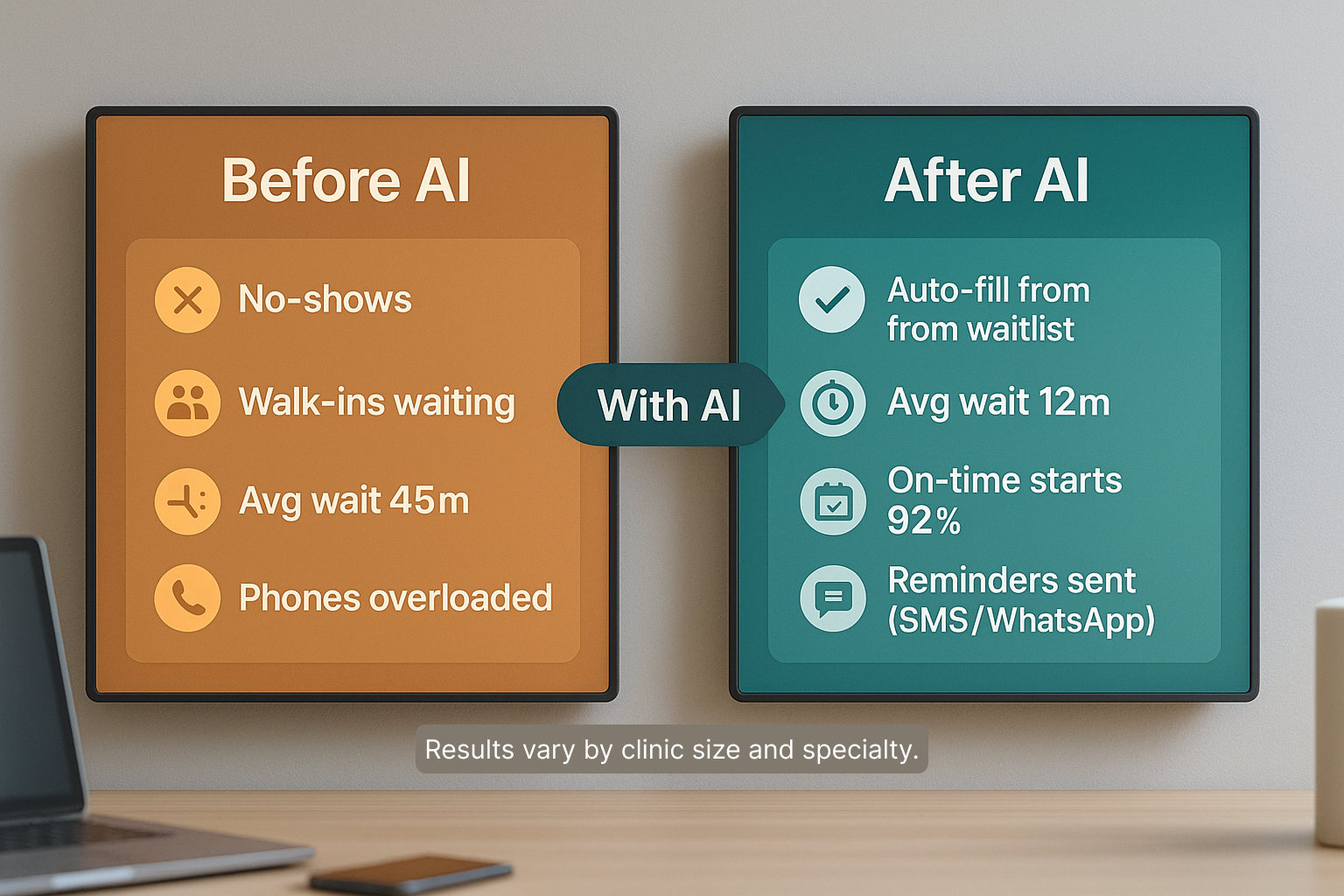
The top problems, and how AI fixes them
1) Missed appointments (no-shows)
Pain: 10-30% no-show rates drain revenue and block access for others. AI fix: Predict no-show risk per patient/slot; double-book only where safe; auto-open a waitlist; send adaptive reminders (SMS/WhatsApp/email) and easy confirmations/cancellations. Impact: No-shows ↓, schedule utilization ↑, revenue per clinician ↑.
2) Long wait times & uneven load
Pain: Peaks overwhelm staff; some rooms stay idle while others run late. AI fix: Slot orchestration (balance rooms/providers), dynamic overbooking when risk is low, auto-reassignment after cancellations, smart check-in + queue estimates. Impact: Wait time ↓, throughput ↑, staff stress ↓.
3) Unclear triage & unnecessary visits
Pain: Patients arrive with non-urgent issues or need guidance first. AI fix: An AI triage bot (grounded in your protocols) classifies urgency, gives safe self-care advice for routine cases, and fast-tracks red flags to a nurse call or same-day slot. Impact: Better resource use, faster care for urgent cases, higher patient trust.
4) Fragmented communication
Pain: Patients juggle phone, email, WhatsApp, portals. Staff re-types info. AI fix: One assistant across channels (web, mobile, WhatsApp) that reads from the same knowledge base and EHR integrations; post-visit follow-ups and care-plan steps are automated. Impact: Fewer back-and-forths, consistent answers, CSAT ↑.
5) Privacy & compliance risk
Pain: PHI in emails/spreadsheets, unclear retention, manual access control. AI fix (privacy by design):
- Consent & transparency: clear purposes; easy opt-out
- Data minimization: only collect what's needed; avoid free-text PHI where possible
- Access control: SSO/SAML, roles, least-privilege, audit logs
- Security: encryption in transit/at rest, key management, regional hosting
- Retention & deletion: policies per record type; patient rights workflows
90-day rollout plan
Days 0-30: Prove value
- Launch booking assistant for 2-3 high-volume services (GP, pediatrics, nursing)
- Connect calendar + reminder channels; enable confirmations/cancellations
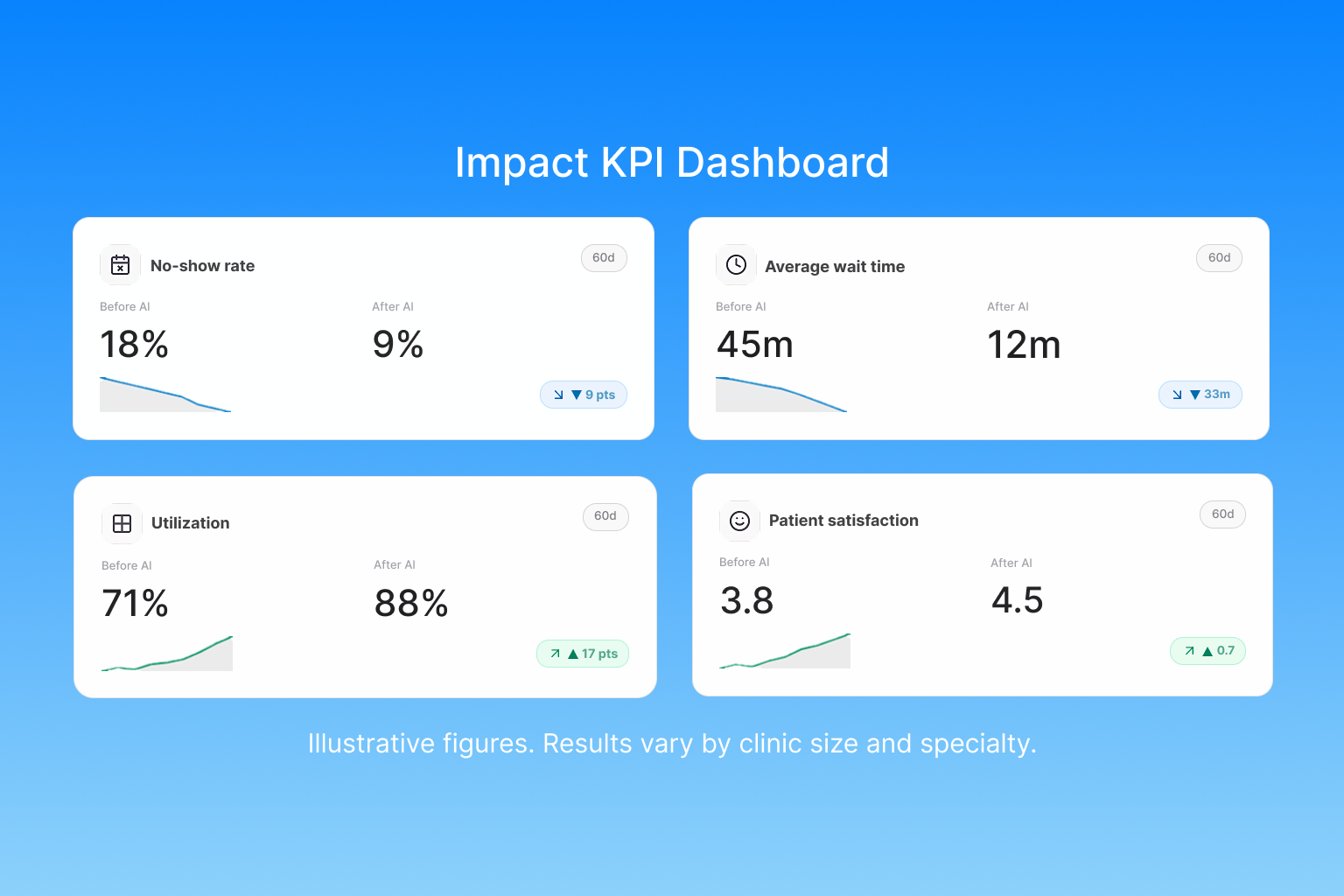
- Baseline KPIs: no-show rate, wait time, utilization, CSAT
Days 31-60: Optimize
- Turn on no-show prediction + waitlist automation
- Add triage bot (routine vs. urgent) with nurse escalation
- Start post-visit follow-ups and questionnaires
Days 61-90: Scale & govern
- Expand to specialties; add multilingual flows (AR/FR/EN)
- Implement full privacy controls: RBAC, audit, retention policies
- Weekly KPI reviews; publish a "patient access" dashboard
What to measure
- Access: no-show rate, schedule utilization, booking lead time
- Flow: average wait time, on-time starts, room/clinician utilization
- Care: % triaged to urgent vs. routine, callback time for urgent
- Experience: CSAT/NPS, complaint rate, message response time
- Governance: audit log coverage, data retention compliance
Data & integration checklist
- Systems: EHR/EMR, calendar, telehealth, messaging (SMS/WhatsApp), help desk/CRM
- Knowledge: protocols, red-flag lists, self-care guidance, prep instructions
- Security: SSO/SAML, role-based access, encryption, regional hosting
- Legal: consent records, retention schedule, DSR (access/delete) workflow
FAQ
Will AI replace clinicians? No—AI automates coordination and answers FAQs so clinicians can focus on care. Is it safe? Yes, if built with consent, minimal data, RBAC, encryption, and audit logs. Do we need new systems? Not necessarily—start by integrating with your calendar, messaging, and EHR.
CTA
Want a 15-minute walkthrough of a pilot tailored to your clinic ? Email: contact@tbeninnovation.com
Share it!
Continue Reading